This guide documents the basing process used for my Tzeentch army.
The goal was a simple, dark base that lets the model stand out, but still includes some visual interest to draw the eye.
The theme is ancient stone flooring, inspired by the ruins of an old marble tower.
- Base
- Air-dry clay + texture roller
- Plaster (small broken pieces for white marble effect)
- Superglue
- Black primer (spray)
- Grey — mid grey and a lighter highlight grey (both mixed from black + white)
- Abaddon Black (for the base rim)
Step-by-Step Process#
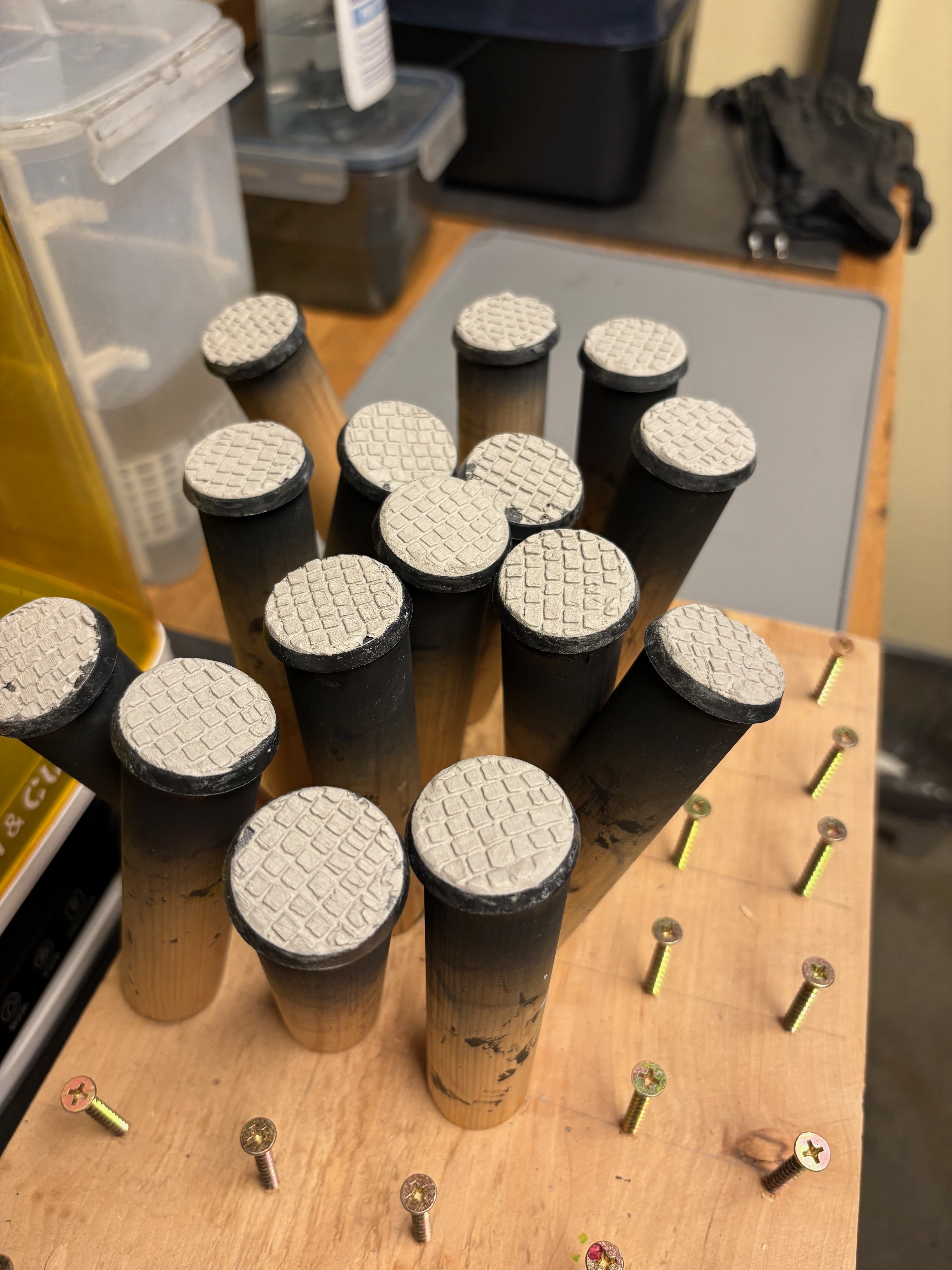
1. Apply Texture#
- Apply clay to the base.
- Use the texture roller to imprint the pattern.
- Remove any excess clay around the edges.
Air-dry clay works best because it sticks to the base and holds texture well.
2. Let It Dry#
- Allow the clay to dry completely before priming.
- This prevents cracking or paint separation later.
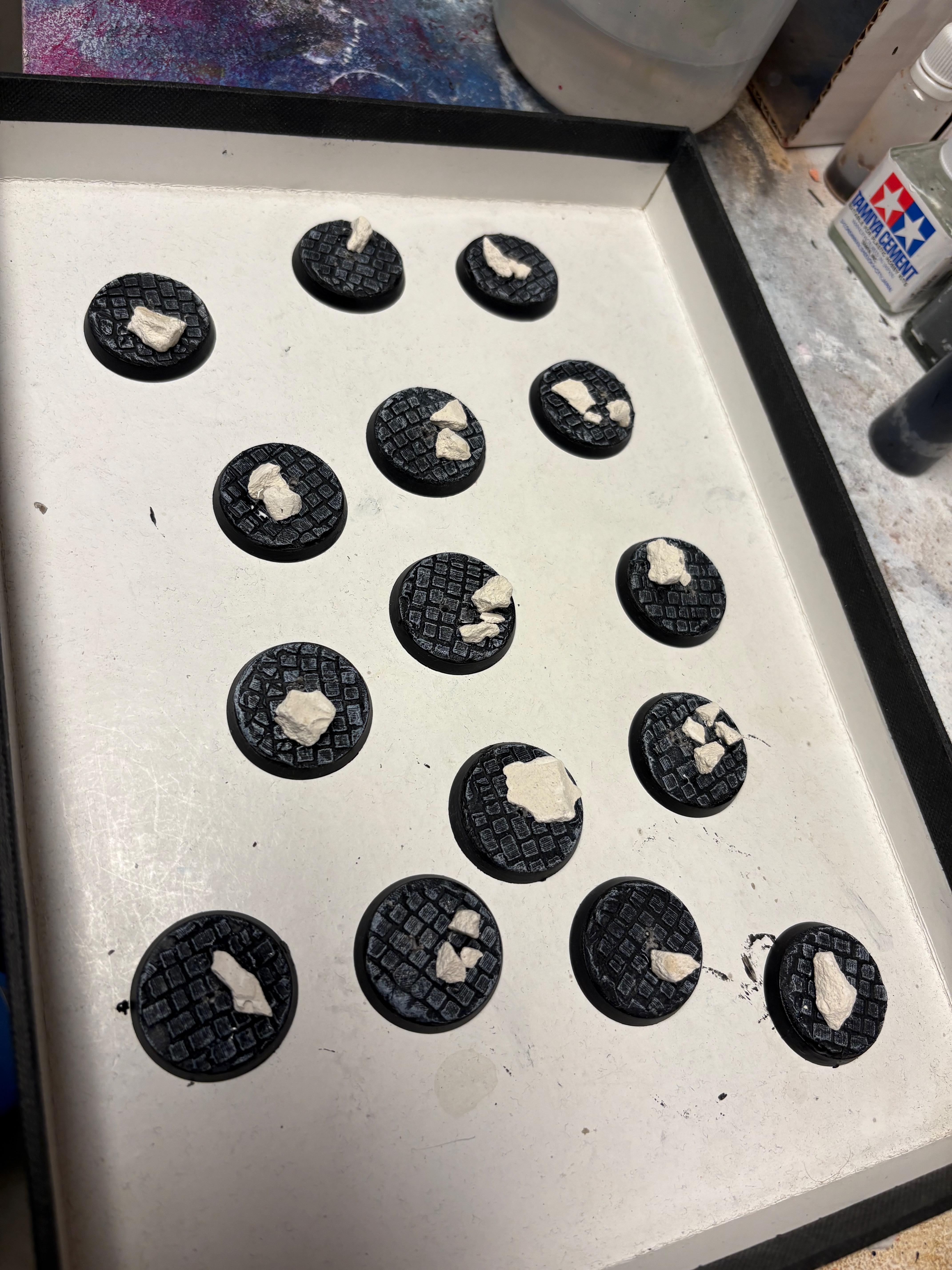
3. Add Marble Pieces#
- Break small chunks of plaster by hand.
- Glue them to the base with superglue to represent broken marble fragments.
Irregular, uneven pieces look more natural than uniform shapes. Press them flat so they sit flush with the stone floor.
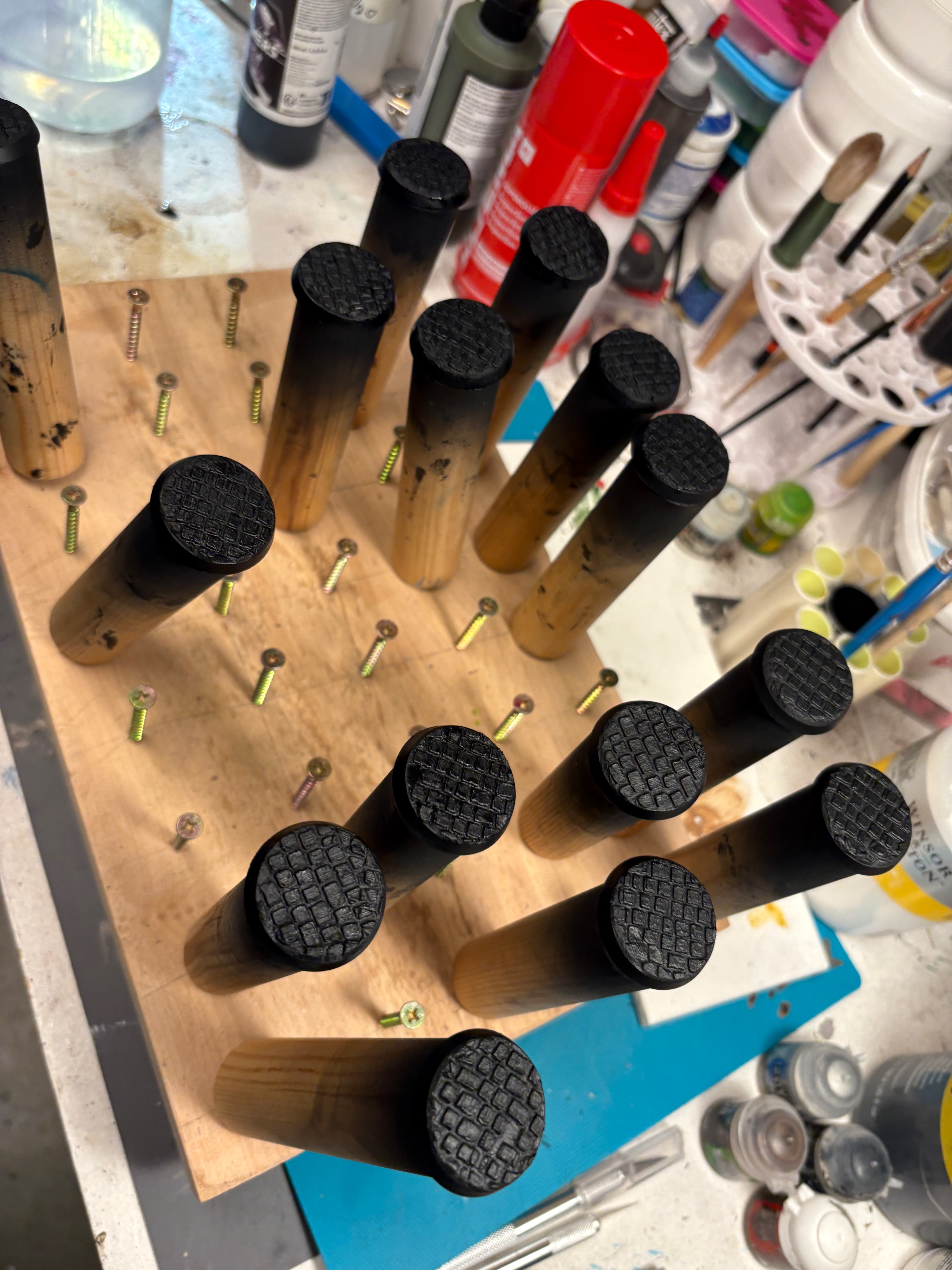
4. Prime#
- Spray the entire base with black primer.
- This creates strong shadows in the texture and ties clay and plaster together.
5. Dry Brush — Mid Grey#
- Lightly dry brush mid grey (more black than white) over the raised texture.
- The plaster pieces will catch a lot of paint here — that’s fine, they should read as light stone.
6. Final Highlight — Light Grey#
- Apply a lighter dry brush of light grey (more white than black) to the highest points only.
Use progressively lighter dry brushing to bring out the texture. Two passes is enough — don’t overdo it or it loses the stone feel.
7. Base Rim#
- Paint the base rim with Abaddon Black for a clean finish.
Keep the base rim clean — it frames the model and improves presentation.
Result#
The finished base reads as dark, cracked stone flooring with pale marble rubble scattered across it. The black primer in the recesses does most of the work — the grey drybrushing just catches the top surfaces and sells the stone texture.